

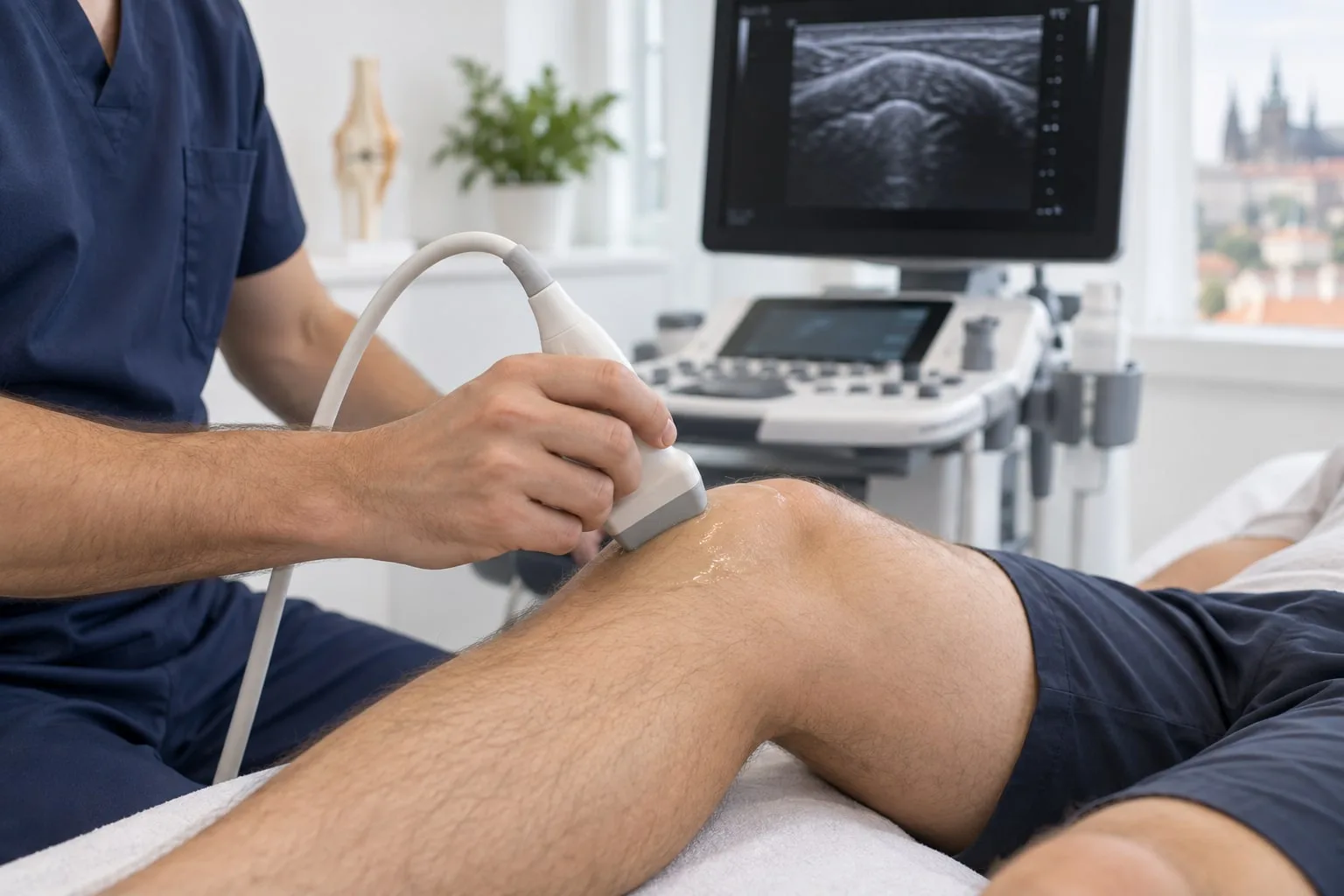
Sonography
Ultrasound examination of organs, blood vessels and the musculoskeletal system based on your symptoms and your doctor’s recommendation.
Ultrasound examination of organs, blood vessels and the musculoskeletal system based on your symptoms and your doctor’s recommendation.
Sonography, also called ultrasound, uses sound waves to produce real-time images of organs and tissues. The examination does not use ionising radiation.
Ultrasound can help investigate symptoms, complement a specialist consultation or monitor changes during treatment. It is used in urology, gynaecology, vascular and general surgery, and musculoskeletal care. The doctor chooses the appropriate examination and interprets the findings alongside your symptoms and other results.
The scope of the scan depends on your symptoms and the specialist’s field. Ultrasound is used in areas such as:
The doctor discusses your symptoms and explains the procedure. For a scan through the skin, gel is applied and a probe is placed over the area being examined. An internal probe may be recommended for some gynaecological or urological examinations.
Tell us what you need help with. We help find a suitable specialist for the type of scan you need.
Vascular surgeon with German clinical training and board certification in vascular surgery. His practice focuses on vascular and venous surgery, including assessment and treatment planning for vascular disease.

Board-certified urologist with extensive experience in functional urology and andrology. A graduate of the First Faculty of Medicine at Charles University, he began his career in hospital surgery and now focuses on outpatient urological care.

Certified urologist with experience in uro-oncology, urinary stone disease, and prostate conditions. She has worked in major hospital urology departments and holds the FEBU European urology qualification.

Certified gynaecologist and obstetrician focused on outpatient gynaecological care, prevention, and consultations across different life stages. She completed board certification at Charles University.

General surgeon with hospital surgical training and second-level certification in surgery. His practice includes vascular outpatient care and minimally invasive treatment of varicose veins using the ClariVein method.

Board-certified general surgeon with experience from the 1st Department of Surgery at the General University Hospital (VFN) in Prague. His practice focuses on general and minimally invasive surgery, including hernia repair.
Medical director of Barna Medical with specialist training in orthopaedics and rehabilitation medicine. His experience includes Motol University Hospital, the Czech national athletics team, the Czech Olympic Committee, and professional sports clubs.
Before your visit
Preparation depends on the area being examined. Some abdominal scans may require fasting, while bladder scans may require a full bladder. Muscle and joint ultrasound usually needs no special preparation. Confirm the specific instructions when booking and bring any previous medical reports.
It is usually well tolerated. Pressure over a tender area may be uncomfortable; let the doctor know.
No. It cannot reliably show all structures, particularly the inside of bones and some deeper tissues. Your doctor may recommend additional imaging.
Use the contact form to describe your symptoms. OpenMedical helps arrange your visit; the appointment and examination details need to be confirmed when booking.