Hair loss: when to see a dermatologist and what to expect
More hair on your brush, a widening part or a bald patch: when to seek help, what an assessment involves and why autumn may not explain every change.
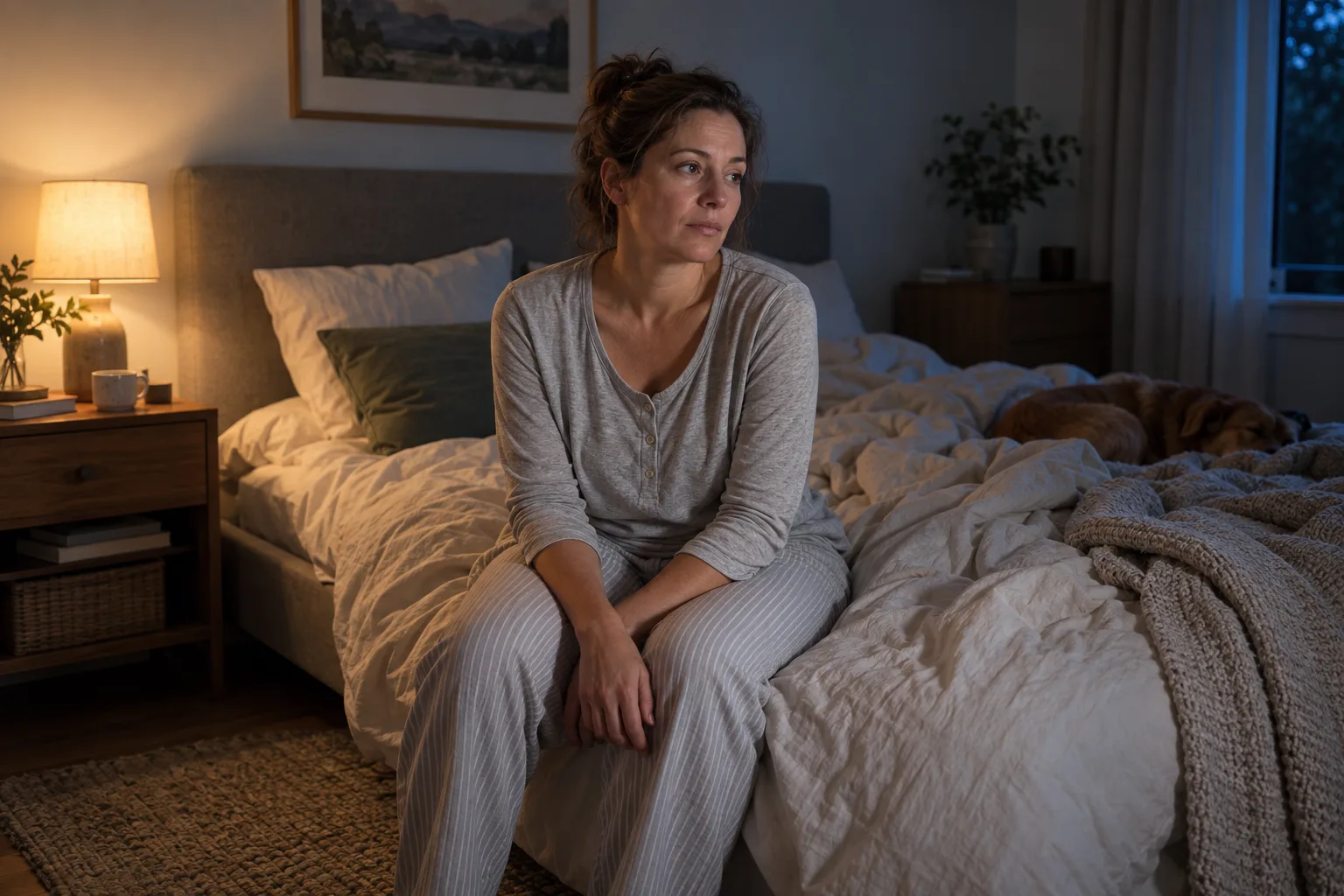
Finding more hair in the shower or on your brush can be worrying, especially if your part looks wider or your ponytail feels thinner. Some causes of increased shedding are temporary; others need treatment. If your hair is visibly thinning, bald patches appear or your scalp changes, arrange a medical assessment. You do not have to try several shampoos first or wait until the change becomes obvious.
Seasonal shedding often comes up in conversations at the end of summer and in autumn. The season may play a part, but the way your own symptoms develop matters more when deciding what to do. This article explains what information to prepare and what an assessment may involve.
How to describe a change worth checking
Hair continually renews itself, so some shedding is normal. Counting the hairs found after a single wash is not a reliable way to diagnose a problem at home. It is more useful to notice changes from your usual pattern and whether your hair is becoming less dense.
Try to describe exactly what you have noticed:
| Change | What to note |
|---|---|
| More hair when washing or brushing | When it started and whether it is constant, fluctuating or getting worse |
| Gradual thinning | A widening part, a receding hairline or a change in ponytail volume |
| A distinct bald patch | How quickly it appeared and whether more patches are developing |
| Scalp changes | Itching, pain, burning, scaling, redness or oozing |
This table helps describe symptoms; it cannot identify their cause. Also mention loss of eyebrow or eyelash hair and changes to your nails. Tell the clinician if the situation is affecting your wellbeing or everyday life. That is a relevant part of the problem too.
Autumn hair shedding: what the season cannot tell you
Research suggests that the hair cycle can vary during the year. A study of 823 women reporting hair loss found the highest proportion of resting hairs in summer. It does not establish that every episode of autumn shedding is normal or that a particular person does not need an assessment.
Do not automatically put new bald patches, visible thinning or an inflamed scalp down to the weather. The season is one detail in your history, rather than a diagnosis. Online photographs also cannot reliably distinguish between conditions that may look similar.
Why hair may start shedding more
One cause is telogen effluvium, in which more hairs enter the resting phase and later fall out. Increased shedding may appear around two to four months after a trigger, such as a feverish illness, surgery, childbirth, substantial stress or rapid weight loss. It is therefore useful to think back beyond the past few weeks.
Other possibilities include hereditary hair thinning, a scalp condition or another health problem. With distinct bald patches, a clinician may consider alopecia areata, a condition involving the immune system. Hairstyles that repeatedly pull tightly on the hair can cause damage through traction. More than one cause can occur at the same time.
Iron deficiency and thyroid disorders are possible factors, rather than an explanation for every case. Medicines can also be relevant. If you suspect a prescribed medicine, discuss it with the clinician who prescribed it; do not stop it yourself.
When to see a dermatologist or start with a GP
A dermatologist assesses hair and scalp conditions, including visible thinning, new bald patches and skin changes. Do not put off arranging a visit simply because hair loss runs in your family or autumn has just begun. Contact the practice promptly if hair loss is rapid or your scalp is painful, markedly red or oozing, and describe these symptoms when booking.
If you also feel unwell, with symptoms such as unusual fatigue, a substantial weight change or other general health concerns, a GP can be a useful first contact. They can assess the wider health context and whether further care is needed.
You do not have to choose the right specialty on your own. When arranging care, explain the main change, how long it has been happening and any accompanying symptoms. There is no need to wait for a particular duration or an exact number of shed hairs before asking for help.
What happens during a hair-loss assessment?
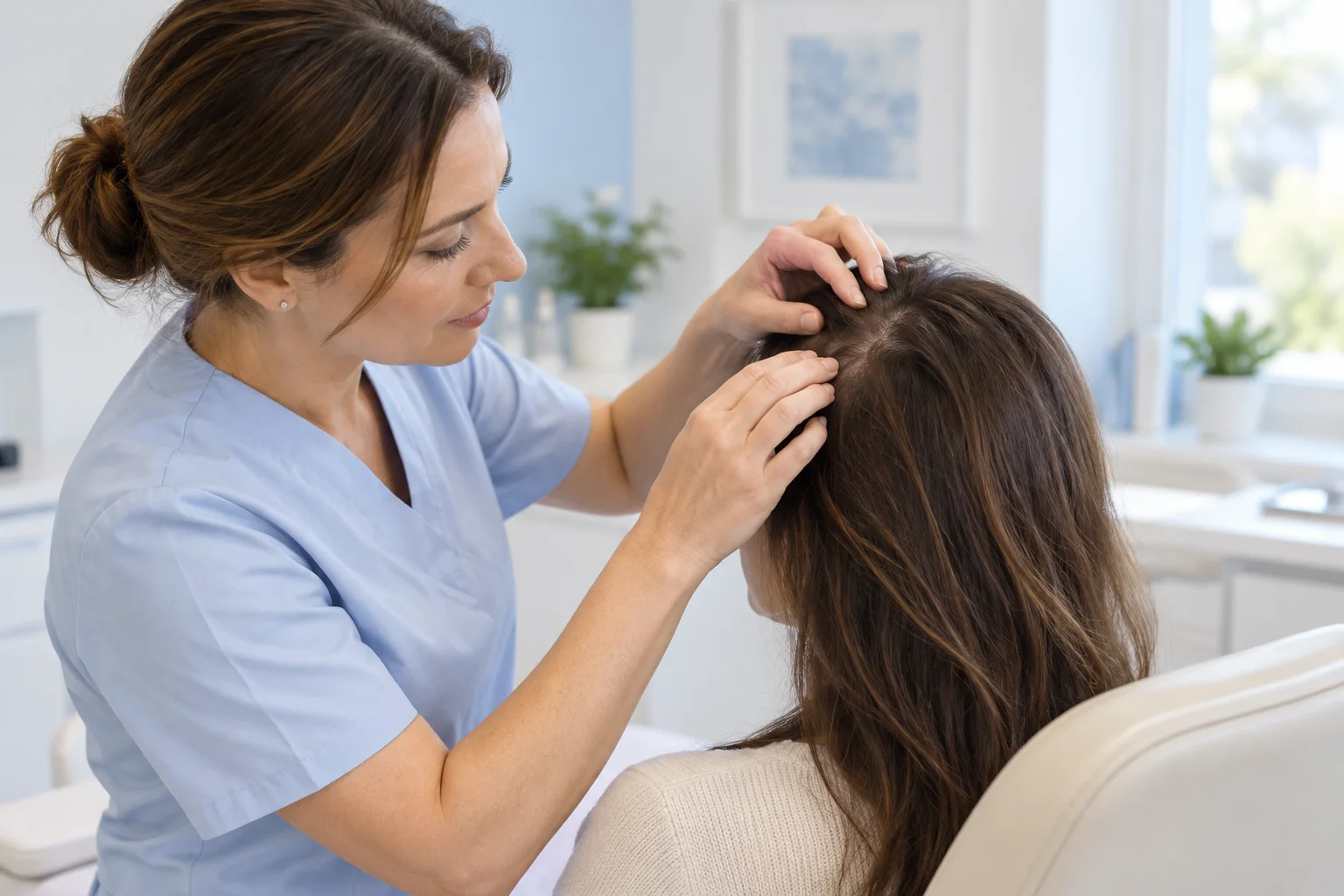
The starting point is a discussion and an examination of your hair and scalp. The clinician may ask about the pattern of change, recent illnesses, dietary changes, medicines and supplements, and similar problems in your family. Depending on the findings, they may use a magnifying instrument to look more closely at the scalp and hairs or perform a gentle hair-pull test.
Blood tests are not automatically the same for everyone. Depending on your history and examination, a full blood count, assessment of iron stores with ferritin or thyroid-function tests may be useful. Other investigations depend on what the clinician suspects. A broad hormone or vitamin panel is not a universal first step.
Further investigations are sometimes needed when the cause remains unclear, occasionally including a small skin sample. This is not a routine part of every appointment. Ask what question a suggested test is intended to answer and how its result would change the next steps.
What to prepare before your appointment
A short summary can make the consultation easier to use:
- A timeline: the approximate start, any worsening or fluctuations, and significant events in the preceding months.
- Photographs: if available, pictures of the same area in similar lighting, without filters or hair-concealing products.
- Medicines and supplements: names, doses, and when you started taking or changed them.
- Other symptoms and results: scalp or nail changes, general health concerns and any existing laboratory results.
- Your questions: what you want to understand, how progress will be monitored and when follow-up should happen.
When booking, ask about washing your hair and using styling products before the visit; instructions may depend on the planned examination. Our appointment-preparation checklist covers the wider documents and questions you may want to bring.
What you can do while waiting for assessment
Handle your hair gently, reduce styles that pull on the scalp, and avoid harsh brushing or repeated excessive heat. These steps may reduce further damage, but they do not replace identifying the cause of thinning.
Do not start high-dose iron or combinations of “hair vitamins” solely on the strength of an advertisement. Supplementing a particular nutrient should reflect an actual need and your health circumstances. Biotin can interfere with some laboratory results. If you take it, tell the clinician and the team taking your blood. Ask for advice about any changes before testing rather than deciding on a break yourself.
Frequently asked questions about hair loss
Do I need to count the hairs I lose every day?
No. For an initial consultation, it is more useful to describe the change from your usual pattern, how long it has lasted, visible thinning and any scalp symptoms. Your clinician can suggest a particular way to monitor it if needed.
Can shedding begin months after an illness?
Yes. With telogen effluvium, several months can pass between the trigger and increased shedding. Timing alone does not confirm the diagnosis, especially if hair is thinning or your scalp is changing.
Should I pay for blood tests before the appointment?
It is usually more practical to discuss your symptoms with a clinician first. Investigations are chosen according to your history and examination. Bring results you already have so the clinician can assess their usefulness and avoid unnecessary repeat tests.
Will my hair grow back on its own?
That depends on the cause. With temporary telogen effluvium, growth often recovers after the trigger has passed, but fullness may take months to return. Other causes need treatment, and complete regrowth cannot be promised. Agree with your clinician what to expect and when to reassess the situation.
Need help arranging a dermatology consultation in Prague?
Our dermatovenerology page explains the specialty. For help arranging an appointment, contact OpenMedical. In your message, mention that you would like an appointment for hair loss and briefly describe the change, its duration and your preferred language. We will check a suitable appointment and the visit arrangements with a partner practice; the clinician decides on assessment and treatment.
This article provides general information for adults and does not replace an individual medical assessment.
Sources and editorial references
Sources checked on 2026-09-28.
- American Academy of Dermatology: aad.org
- British Association of Dermatologists: bad.org.uk
- DermNet: dermnetnz.org
- NHS: nhs.uk
- American Academy of Family Physicians: aafp.org
- NIH Office of Dietary Supplements: ods.od.nih.gov
- Study of seasonal variation in the hair cycle: pubmed.ncbi.nlm.nih.gov