

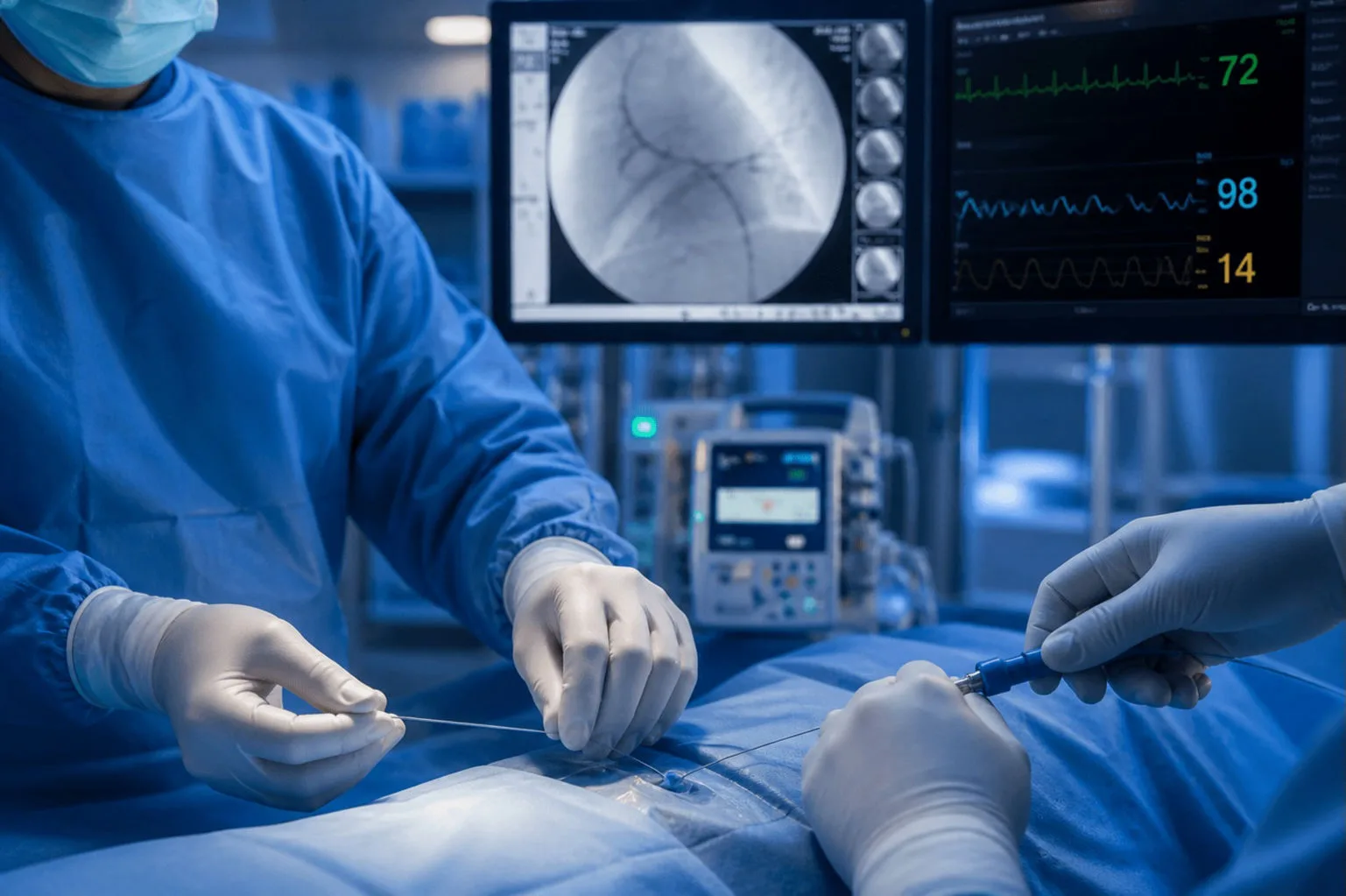
Vascular surgery
Varicose vein assessment at a partner clinic in the OpenMedical network, from consultation and ultrasound to treatment choice, indicated surgery, and follow-up.
Varicose vein assessment at a partner clinic in the OpenMedical network, from consultation and ultrasound to treatment choice, indicated surgery, and follow-up.
A vascular surgeon at a partner clinic in the OpenMedical network assesses varicose veins and examines the venous system with ultrasound. Based on the findings, they recommend monitoring, conservative care, an outpatient procedure, or surgery.
The pathway has four connected steps: consultation with ultrasound, treatment choice, an indicated operation, and follow-up. OpenMedical coordinates appointments and records between each step.
A venous consultation with ultrasound currently costs 1,500 CZK. If the surgeon indicates an operation, it may be covered by Czech public health insurance. OpenMedical confirms the current price and coverage terms before booking.
The first step is a vascular surgery consultation with a venous ultrasound.
The surgeon selects treatment based on ultrasound, symptoms, health, and the affected veins.
If the surgeon indicates a varicose vein operation, they explain the procedure, preparation, and expected recovery.
Follow-up checks healing and sets a safe return to normal activity.

Vascular surgeon with German clinical training and board certification in vascular surgery. His practice focuses on vascular and venous surgery, including assessment and treatment planning for vascular disease.

General surgeon with hospital surgical training and second-level certification in surgery. His practice includes vascular outpatient care and minimally invasive treatment of varicose veins using the ClariVein method.
Short answers about varicose veins, ultrasound, operations, coverage, and follow-up.
Varicose veins should be checked by a doctor when they cause pain, swelling, heaviness, skin changes, itching, bleeding, or visible worsening. Seek urgent medical help for sudden leg swelling, severe pain, shortness of breath, or chest pain.
The pathway starts with a consultation and ultrasound. The surgeon recommends treatment based on the findings. If a varicose vein operation is appropriate, the procedure, preparation, and follow-up are then scheduled.
The best treatment depends on the vein pattern, ultrasound findings, symptoms, skin condition, and health history. A surgeon may recommend compression, sclerotherapy, laser treatment, ClariVein, miniphlebectomy, or a combined plan.
A venous consultation with ultrasound currently costs 1,500 CZK. An indicated varicose vein operation may be covered by Czech public health insurance. OpenMedical confirms the specific terms before booking.
At follow-up, the surgeon reviews healing and advises on compression, walking, activity limits, and any further check based on the procedure and recovery.
Yes. OpenMedical can coordinate a consultation with ultrasound at a partner clinic, send records ahead, and arrange the recommended treatment, operation, and follow-up.