Gut health: does your microbiome need a reset?
What everyday food can do for gut health, when a probiotic may have a purpose and what commercial microbiome tests can and cannot tell you.
For everyday gut care, start with a varied diet and enough fibre. Probiotics can have a role in specific situations, but they are not a universal course of treatment for everyone. And a commercial microbiome test cannot yet reliably tell you what your ideal personal diet should look like.
The supermarket offers yoghurt with cultures, capsules containing billions of bacteria and drinks promising to support your gut. Online, you can also buy microbiome tests and programmes to “restore your gut flora”. Which of these might be useful, and how can you decide?
What is the gut microbiome?
Your gut is home to a community of microorganisms, mainly bacteria but also viruses and fungi. In everyday language, this is called the gut microbiome or gut flora. Some of these microorganisms help process parts of food that we cannot fully digest ourselves and contribute to immune function.
Microbiome composition varies between people. Diet, medicines and health conditions are among the factors that influence it. We do not yet have one model of a “correct microbiome” that everyone should aim to match.
Bloating alone therefore does not prove that your gut flora is damaged. Constipation, diarrhoea and abdominal pain have different possible causes and need to be considered alongside their pattern and any other symptoms.
Fibre, prebiotics and probiotics: what is the difference?
The similar names can be confusing. They describe different things:
| Term | What it means |
|---|---|
| Fibre | Components of plant foods that are not digested in the small intestine. They help with bowel movements; some are used by gut microorganisms. |
| Prebiotics | Substances that particular microorganisms use, producing a health benefit. Inulin is one example. Not all fibre automatically qualifies as a prebiotic. |
| Probiotics | Live microorganisms with a demonstrated health benefit when given in an appropriate amount. The particular microorganism and how it is used matter. |
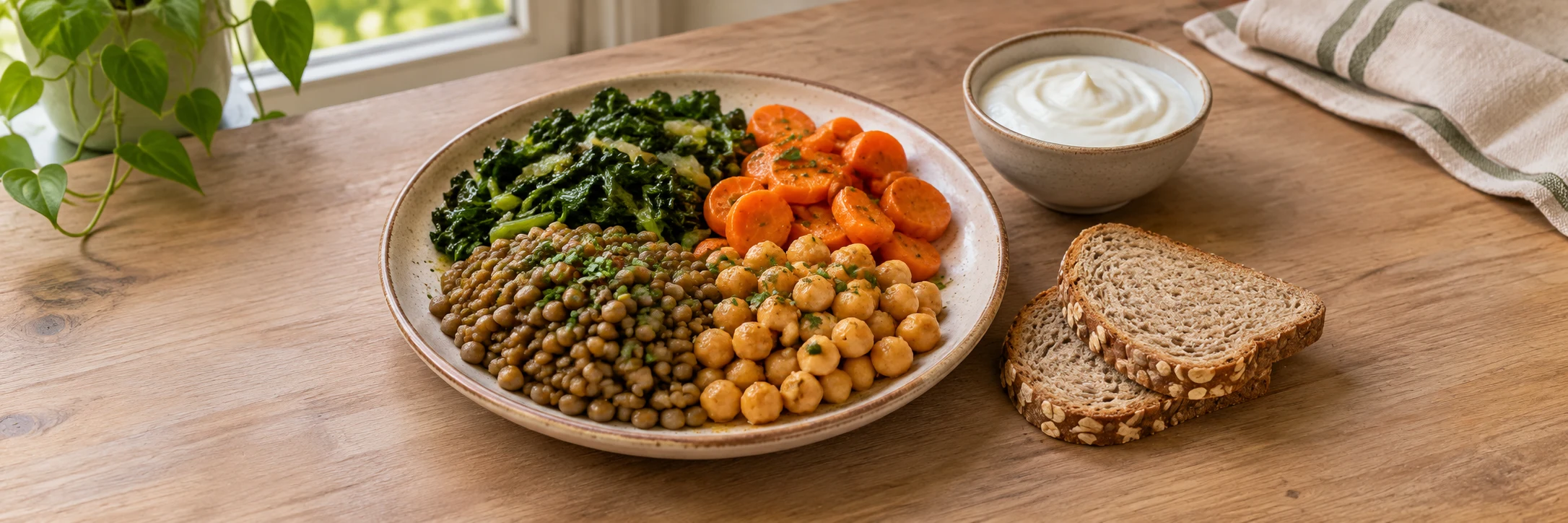
In practice, lentils on your plate and a probiotic capsule serve different purposes. A supplement does not replace a varied diet.
How can everyday food support your gut?
Start with a diet that includes a variety of vegetables, fruit, pulses, whole grains, nuts and other everyday foods. The World Health Organization recommends that adults get at least 25 grams of naturally occurring dietary fibre a day. If you have a condition or prescribed diet that requires different advice, follow your individual care plan.
You do not need to count every gram immediately. Look at what your meals usually lack. For example, you could:
- replace some white bread with wholemeal bread;
- add a small portion of lentils or beans to soup or a salad;
- include vegetables with a meal and fruit as a snack;
- swap a breakfast pastry for porridge on some mornings.
If you have been eating little fibre, increase it gradually and drink enough fluids. A big overnight change can increase gas. There is no need to start eating pulses several times a day, add a large portion of bran and begin a new supplement all at once.
If a food repeatedly seems to trigger symptoms, note the amount and circumstances. Discuss major food exclusions with a doctor or dietitian so your diet stays varied and provides enough nutrients.
Are kefir and sauerkraut the same as probiotics?
Yoghurt, kefir and sauerkraut are fermented foods: microorganisms play a part in making them. They can add variety to your diet if you tolerate them well. Fermentation alone, however, does not establish a probiotic benefit.
Some products contain live cultures when eaten, while others no longer do after heat treatment. To describe something as a probiotic, we also need to identify the microorganism and have evidence of its benefit. “Fermented”, “with live cultures” and “probiotic” are therefore not interchangeable terms.
You do not need to turn fermented foods into a course of treatment. Choose ones you enjoy and tolerate, and consider them as part of your overall diet.
When might a probiotic be useful?
In some specific situations, particular probiotic products may help. The result of a study using one strain cannot automatically be applied to a different product. A strain is a more precisely identified variant of a microorganism; its label may include letters and numbers.
When discussing a product with a doctor or pharmacist, ask:
- What specific problem is it intended to address?
- Is there evidence that this strain or combination helps with that purpose?
- How long should I use it, and how will we judge whether it helps?
A higher number of billions of bacteria on the packet does not necessarily mean a better effect. If you're healthy and have no symptoms, you don't necessarily need a daily probiotic.
If you have a weakened immune system or a serious illness, discuss probiotics with your treating doctor first. In these situations, live microorganisms in a supplement can also cause harm.
Do you always need to “restore gut flora” after antibiotics?
Antibiotics can change the gut microbiome and sometimes cause diarrhoea. Certain probiotics may reduce the risk of antibiotic-associated diarrhoea in particular patient groups. That is a specific purpose, rather than evidence that every product returns the microbiome to its previous state.
If a doctor prescribes an antibiotic, ask whether a probiotic makes sense for your situation. There is no established universal “restoration course” for everyone after treatment. If you develop severe or persistent diarrhoea, fever, blood in your stool or signs of dehydration during or after antibiotics, seek medical advice promptly. Even milder symptoms are worth discussing rather than simply switching supplements.
What can a commercial microbiome test tell you?
Testing a stool sample can describe some of the microorganisms present. But that profile cannot yet reliably provide a personal treatment plan. An international expert consensus notes that evidence for the routine clinical use of these tests is limited. Strict “healthy ranges” for the proportions of individual bacteria are also uncertain.
Researchers at the US National Institute of Standards and Technology also found differing results when commercial services analysed the same starting material. A result can therefore reflect the laboratory method used as well.
Before buying a test, ask: What decision will this result change, and who will explain it professionally? A doctor recommending a targeted stool investigation for particular symptoms is a different situation from buying a general microbiome profile.
When should you discuss digestive symptoms with a doctor?
If bloating, abdominal pain, diarrhoea or constipation keep returning or do not settle, book an appointment with a GP. Note when symptoms began, changes in your stools, medicines including antibiotics and supplements, and what you have already tried. Our appointment preparation checklist can also help.
Seek prompt medical advice for blood in your stool or unexplained weight loss. Get immediate help for sudden severe abdominal pain, vomiting blood, heavy bleeding from the rectum or black, tarry stools; in Czechia, call 155. Do not wait to see whether a diet change or probiotic helps.
Frequently asked questions
Do I need a microbiome test before changing my diet?
You do not need one for ordinary changes towards a varied diet. If you have ongoing symptoms or a prescribed diet, discuss changes with a doctor or dietitian. Any investigations should be chosen according to your specific symptoms.
Does bloating mean a probiotic is working?
Bloating can occur as a side effect of probiotics. By itself, it does not show that your microbiome is being “restored”. If symptoms persist or get worse, discuss further use with a doctor or pharmacist.
Help with recurring digestive symptoms
Would you like to arrange a consultation for recurring digestive symptoms? Contact OpenMedical and briefly describe the problem and how long it has been happening. We can help check options for a planned appointment. Examinations and treatment are provided by healthcare facilities and doctors.
This article provides general information for adults and does not replace an individual medical assessment.
Sources
Sources checked on